


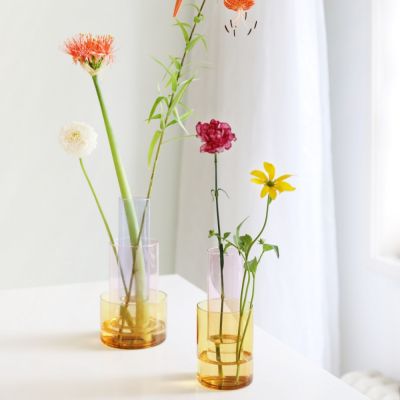


If you need to furnish your professional activity, here is a space dedicated to you.

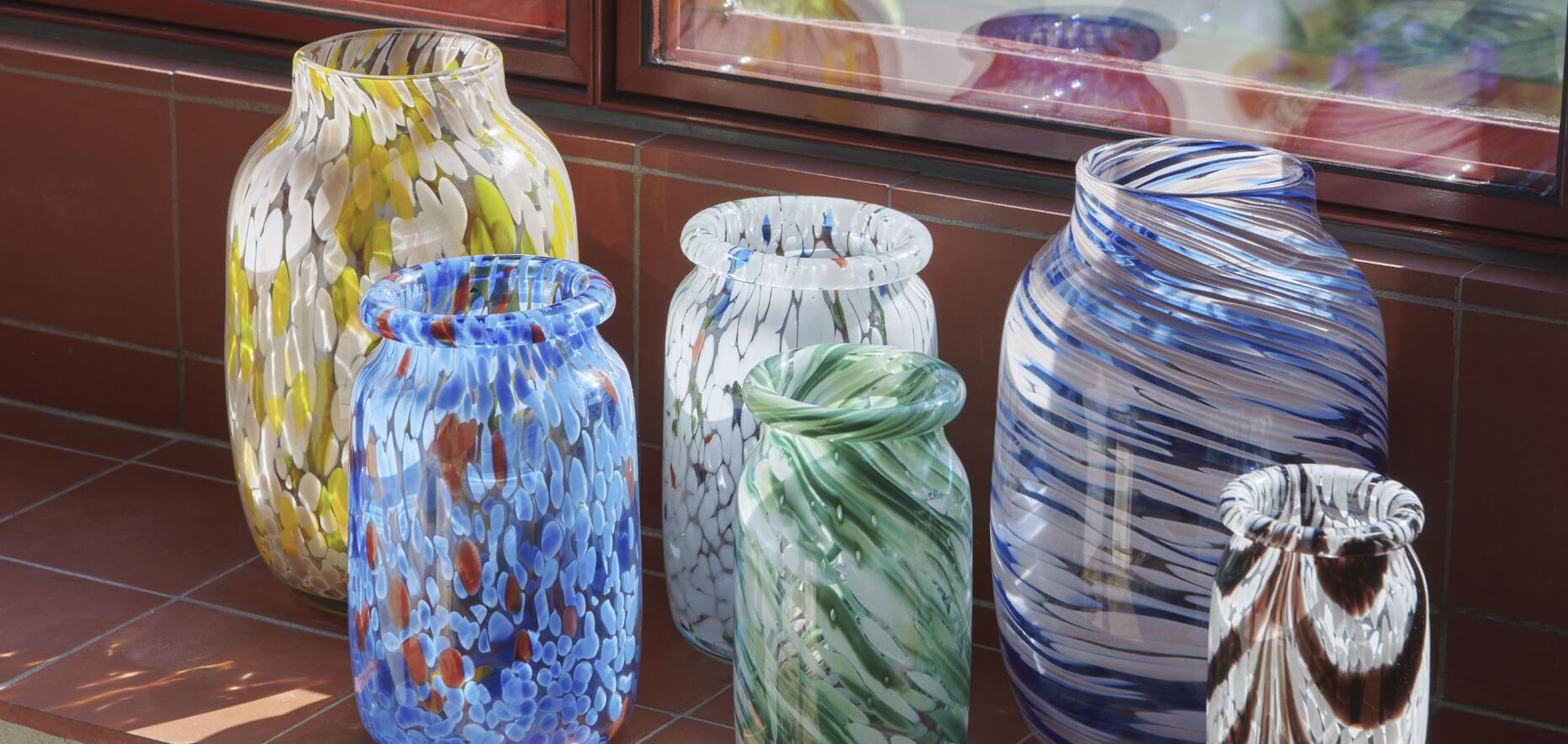
Whether it's a sunny terrace, a cozy corner of the living room, or a small windowsill, adding greenery to your home is a refreshing gesture that helps you unwind after a long day. Plants also have the ability to bring balance and well-being to those around them: to accommodate them, you need worthy containers, pots, and planters that are not only functional but also able to complement the home's style, whatever it is—modern, classic, or minimalist.
In this in-depth look, we explore the most interesting design solutions for showcasing greenery in all its forms: from planters that redesign the balcony to sculptural vases that dominate the living room.
When you have a large outdoor space, or you want to create more intimate areas in a garden or terrace, planters become architectural elements in their own right. The idea is to use models like Kado by Pedrali , characterized by large volumes and bold lines, capable of lending structure and order to the space.
In large outdoor spaces, planters can be used as effective elements to organize the available space. If the goal is to create a visual separation between different areas, such as the dining area and the lounge area, using large-volume pots allows for a defined and orderly structure without requiring permanent wall modifications. In this case, it is recommended to use varieties with dense foliage and a vertical or hedge-like growth pattern.
Tip: For an architectural effect, choose textured finishes that match the flooring; if you're looking for a dynamic contrast, alternate vases of different heights to draw the eye, making the space feel deeper and more interesting.
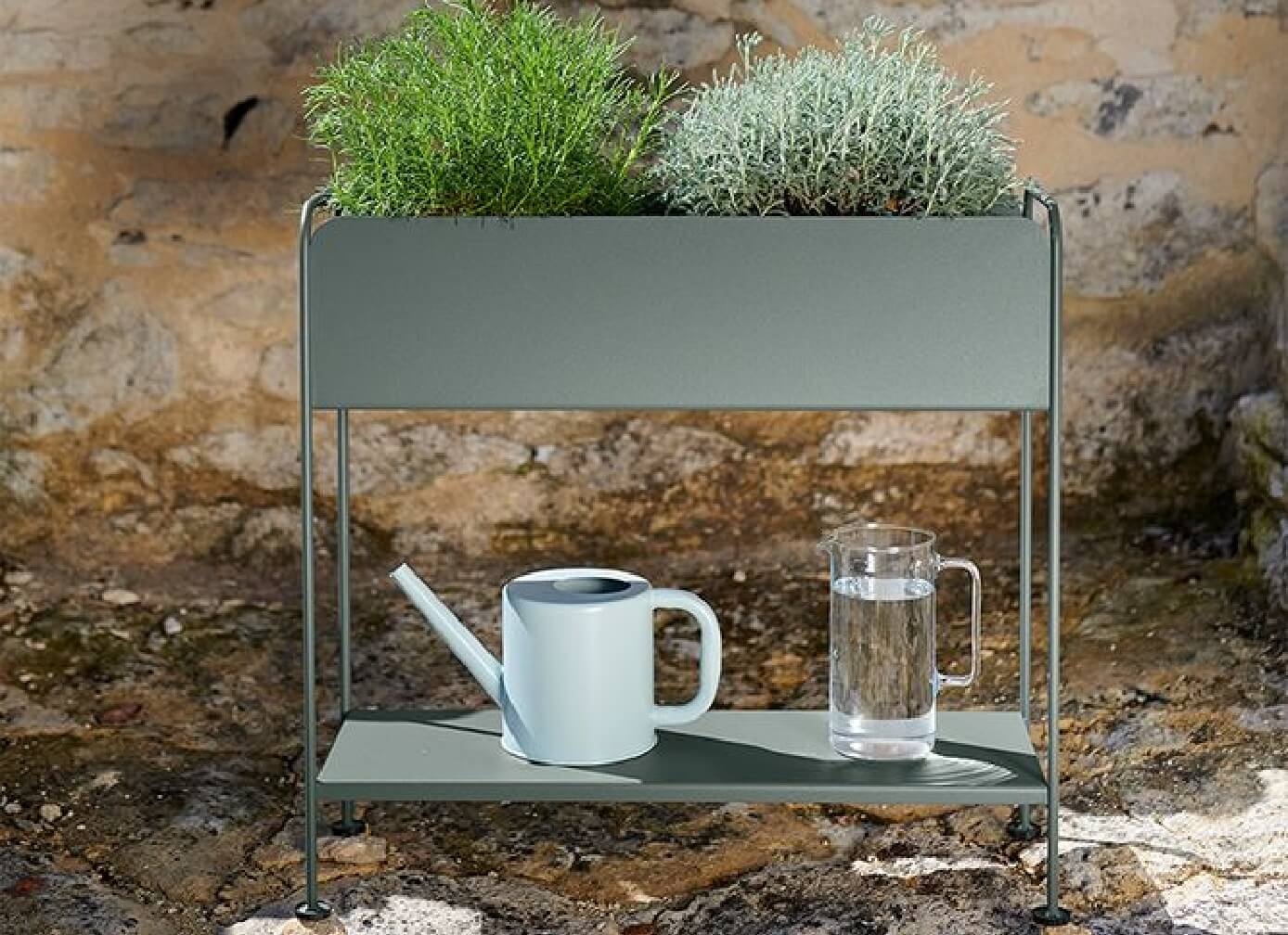
Focusing on verticality is the right strategy for those who want a lush green corner despite having limited floor space. On a narrow balcony or small patio, adding planters like Fatboy's Adoreganizer or column solutions is a smart choice: these elements encourage plants to grow upward, while maximizing floor space for a comfortable table and a few chairs.
The secret to amplifying the perception of space is to favor light shades or colors that blend the walls, giving depth to the room and making the atmosphere immediately more airy, tidy and welcoming.
Tip: Even a simple ladder or shelf can become the foundation for a striking greenery arrangement. In small outdoor areas, you can make the most of verticality by alternating floor-standing pots with raised or hanging ones to add movement and depth to the space. An example? Uma Balcony Box by Ferm Living .
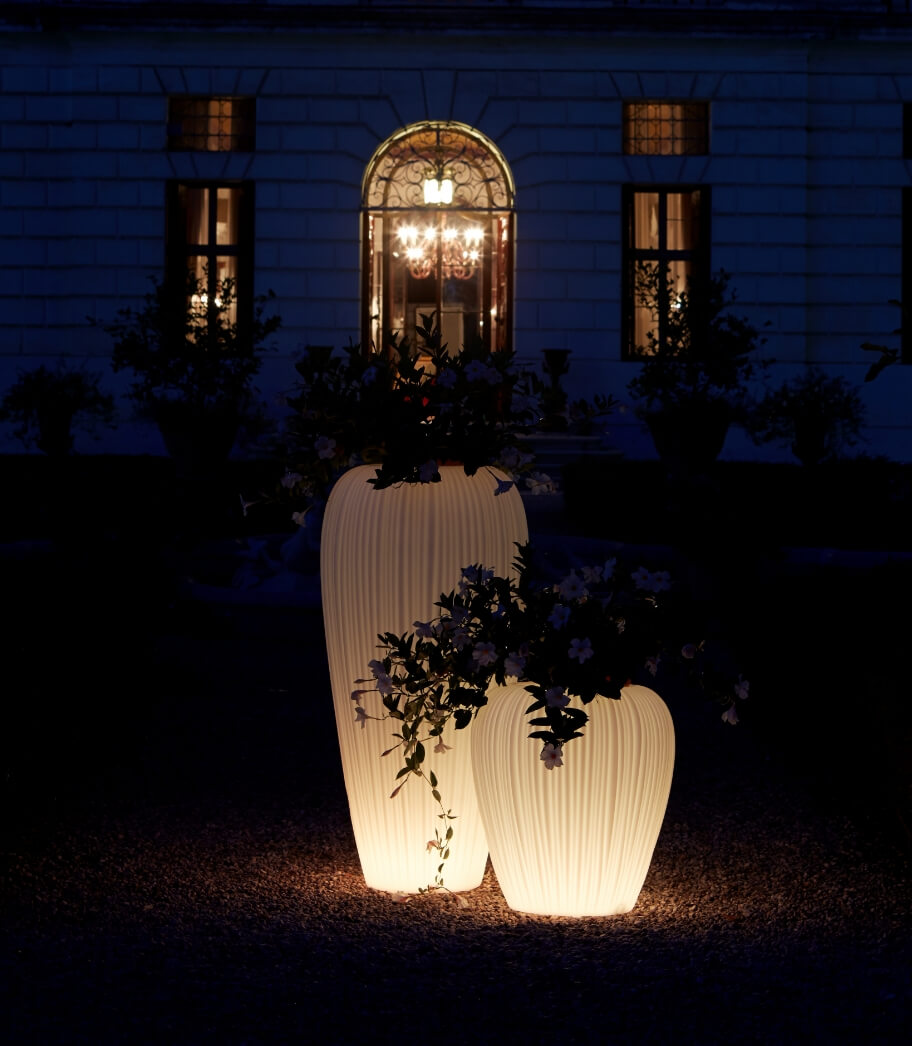
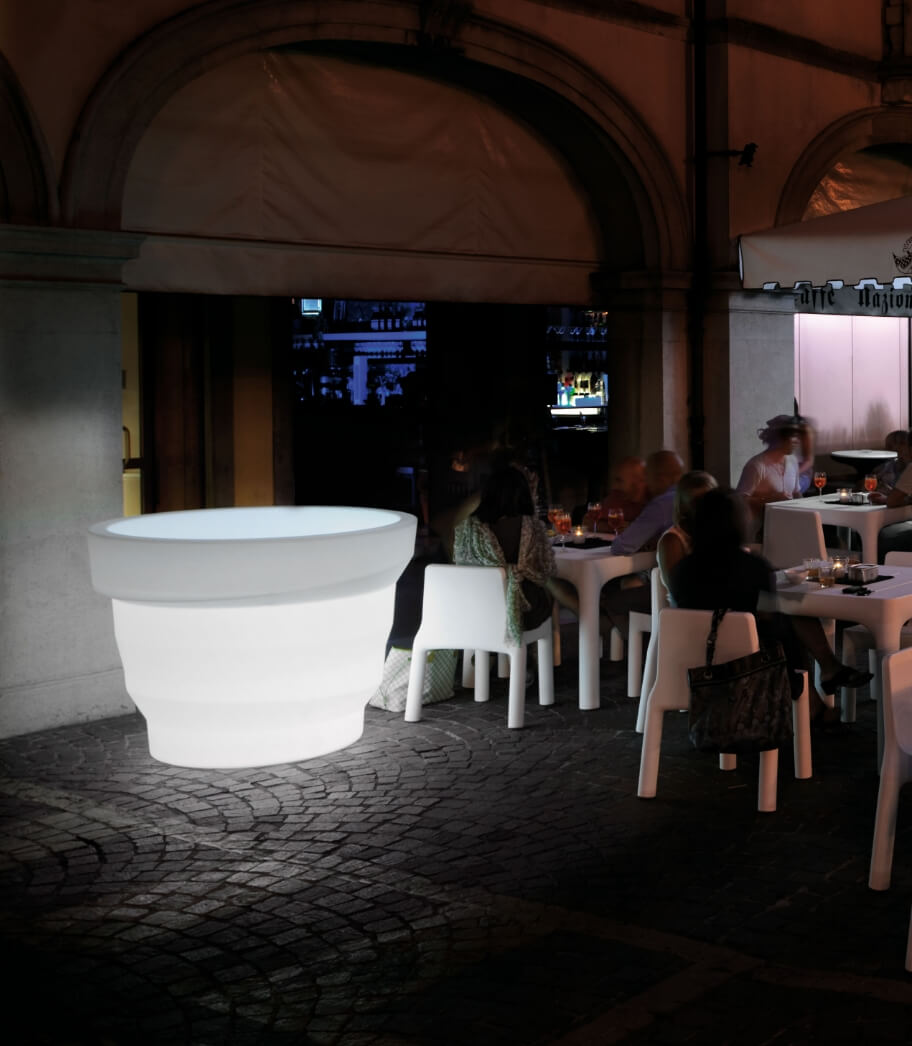
A light-up pot is much more than just a planter; it's a statement piece that defines a space, creating atmosphere and showcasing plants with a soft glow. Ideal for gardens, terraces, and verandas, these white polyethylene vases diffuse light evenly and can accommodate both large plants and more compact arrangements. Skin by MyYour and Saving/Space/Vase by Plust are also versatile solutions for entryways or to define a garden path, while the more compact Bamboo by Slide is perfect for repeating or pairing with outdoor furniture.
Tip: Place them in passageways or near seats to create diffused, welcoming lighting, avoiding other overly invasive light sources.
In many cases, a vase is more than just a container for plants, but a true collector's item. Sculptural, colorful, and sometimes humorous, it asserts itself within the space as a standalone decorative element, capable of capturing the eye even on its own. Sculptural vases work particularly well in contemporary or minimalist spaces, where each object contributes to the visual narrative. Designed for entryways, bookcases, or empty corners of the living room, they can assert themselves as true pieces of domestic art: such is the case with the Bubble Vase by Polspotten , which draws inspiration from the pattern of bubble wrap to create an object that cannot go unnoticed. Seletti's Love in Bloom , a faithful reproduction of the natural shape of the human heart, and Ferm Living's Shell Vase , with its delicate marine appeal, also demonstrate how a vase can be chosen more for its eccentric design than its function.
Tip: Use them even empty, alone or in small groups on a console table or shelf, to strengthen their visual impact.
The shape of the vase also influences the final result. Whether you want to use it for fresh or artificial flower arrangements, just follow a few essential rules:
Cylindrical
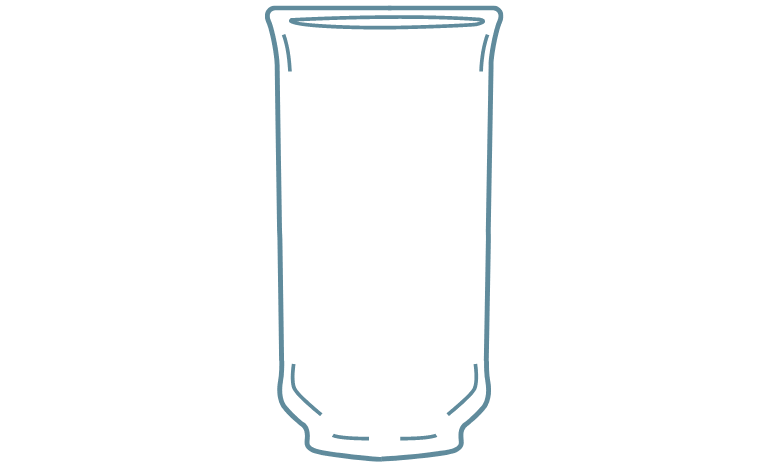
Tall and slender, perfect for single flowers, trailing stems or decorative branches
Hourglass style
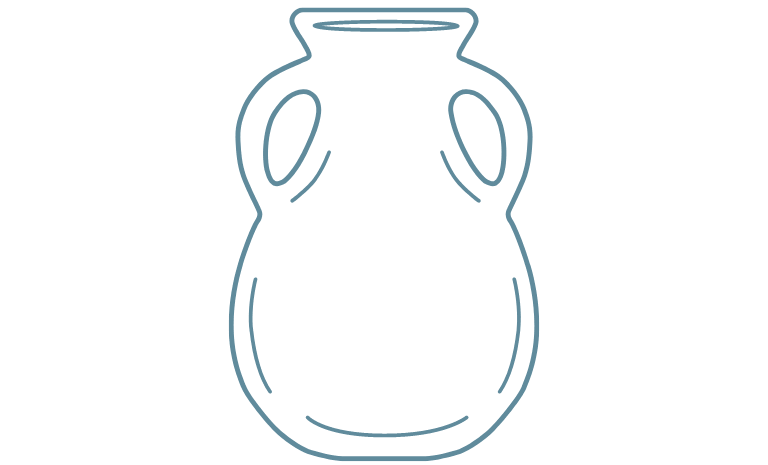
The wide opening and sinuous shape make it ideal for voluminous bouquets, flowers with large leaves or large corollas, such as calla lilies and peonies.
Bowl-shaped
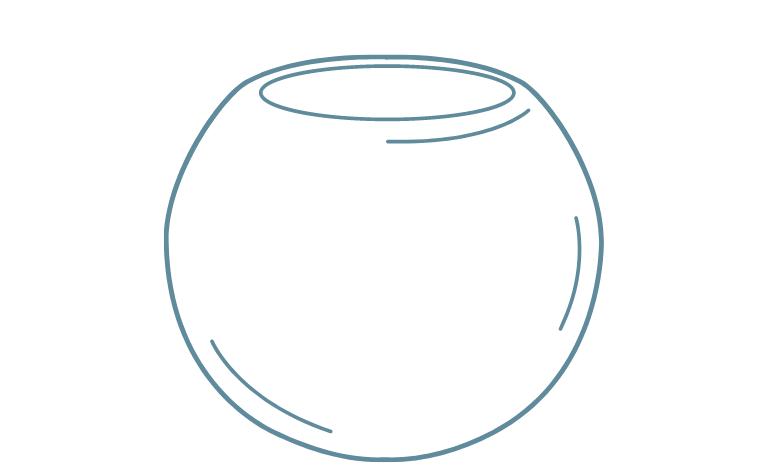
Round and pot-bellied, they are ideal for arrangements of large, petal-rich flowers, such as hydrangeas, roses, or dahlias.
Bottleneck
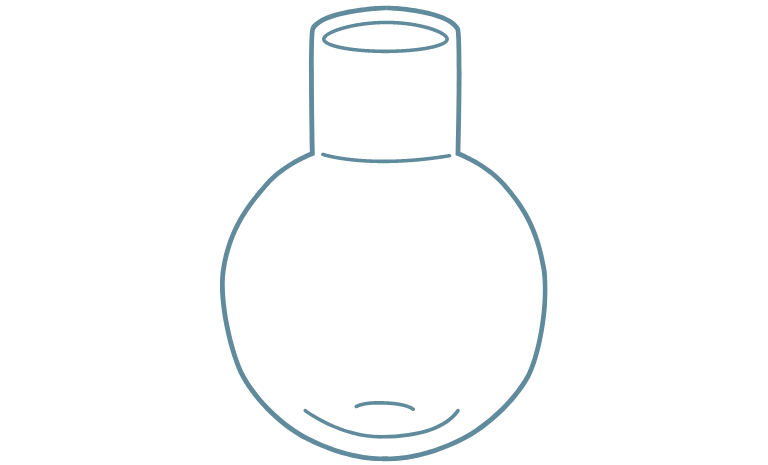
With a broad body and narrow neck, it is suitable for thin-stemmed flowers such as tulips, hyacinths or daffodils
While the previous vases sought to steal the show with their extravagance, minimalist vases do the opposite: they're ideal for showcasing their contents, letting the plants and flowers do the talking. Clean lines, transparent materials, and opaque surfaces provide a silent frame for the vitality of the greenery. The absence of flashy decorations or bright colors isn't a sacrifice, but a harmonious choice that leaves room for floral arrangements. This approach is ideal for interiors with a Japanese, Scandinavian, or contemporary style, where each element interacts with the others without overpowering them.
This is the case of the Ridge vase by Muuto , made of opaque frosted glass, which stands out for its vertical and neat grooves, or the Sumo Vase by 101 Copenhagen in handcrafted ceramic, perfect for decorating any room with delicacy.
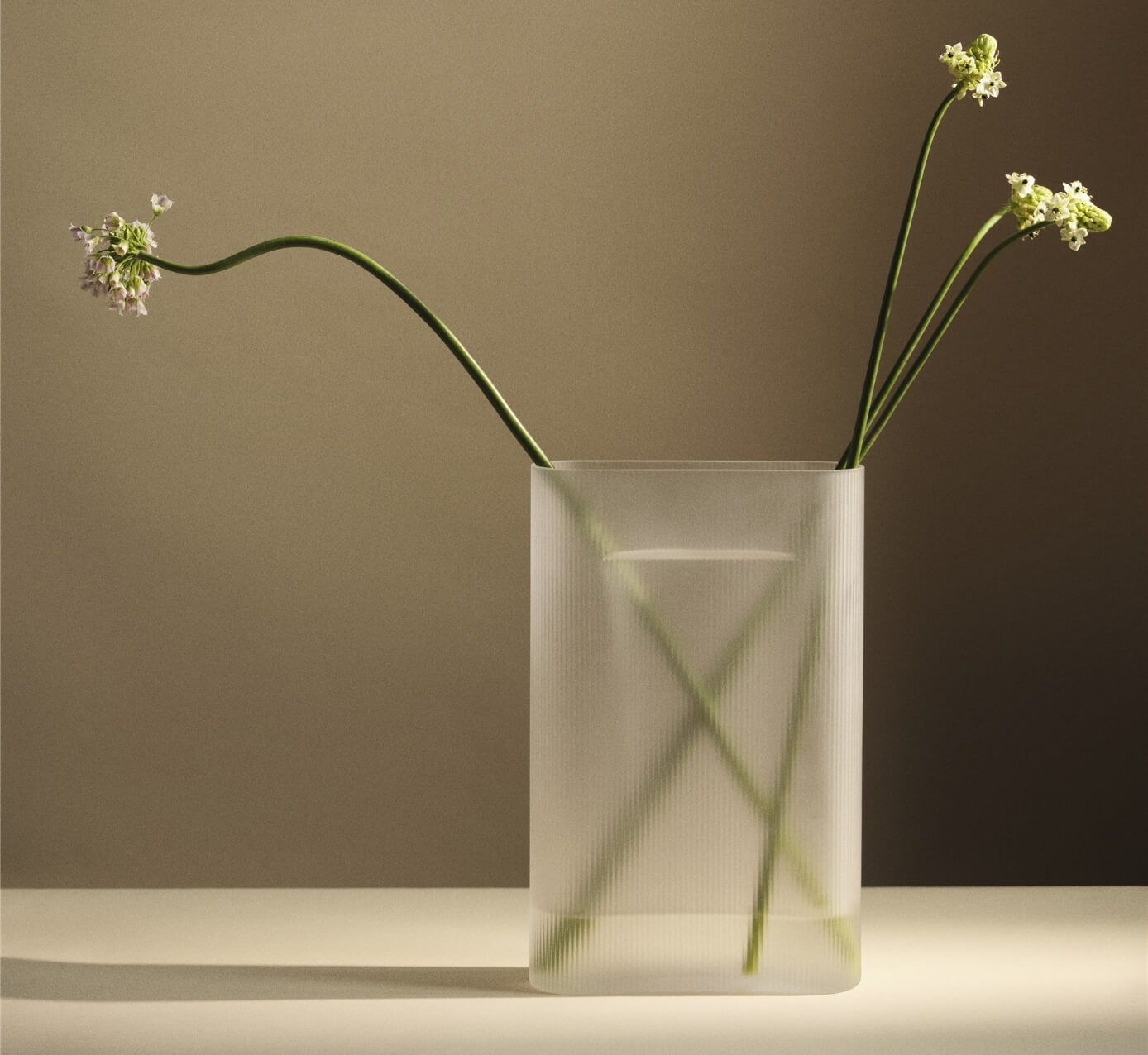
Tip: Choosing natural materials or exquisite ceramics requires a little extra care to preserve the integrity of the design over time. Many of these solutions, due to their porosity or artisanal workmanship, are not designed for prolonged contact with water. The secret to keeping the vase impeccable is to use it as a "pot cover": simply place the plant in a technical container with a saucer or, for an even more invisible and practical solution, line the inside with a plastic bag before placing the flowers. This simple trick prevents moisture stains and stagnant water, ensuring optimal protection for the material and preserving the beauty of the design piece.
If you need to furnish your professional activity, here is a space dedicated to you.
 Belgium
 Bulgaria
 Croatia
 Czech Republic
 Denmark
 Deutschland
 España
 Finland
 France
 Greece
 Hungary
 Ireland
 Italia
 Luxembourg
 Netherlands
 Österreich
 Poland
 Portugal
 Romania
 Slovakia
 Slovenia
 Sweden
 italiano
 english
 français
 deutsch
 español